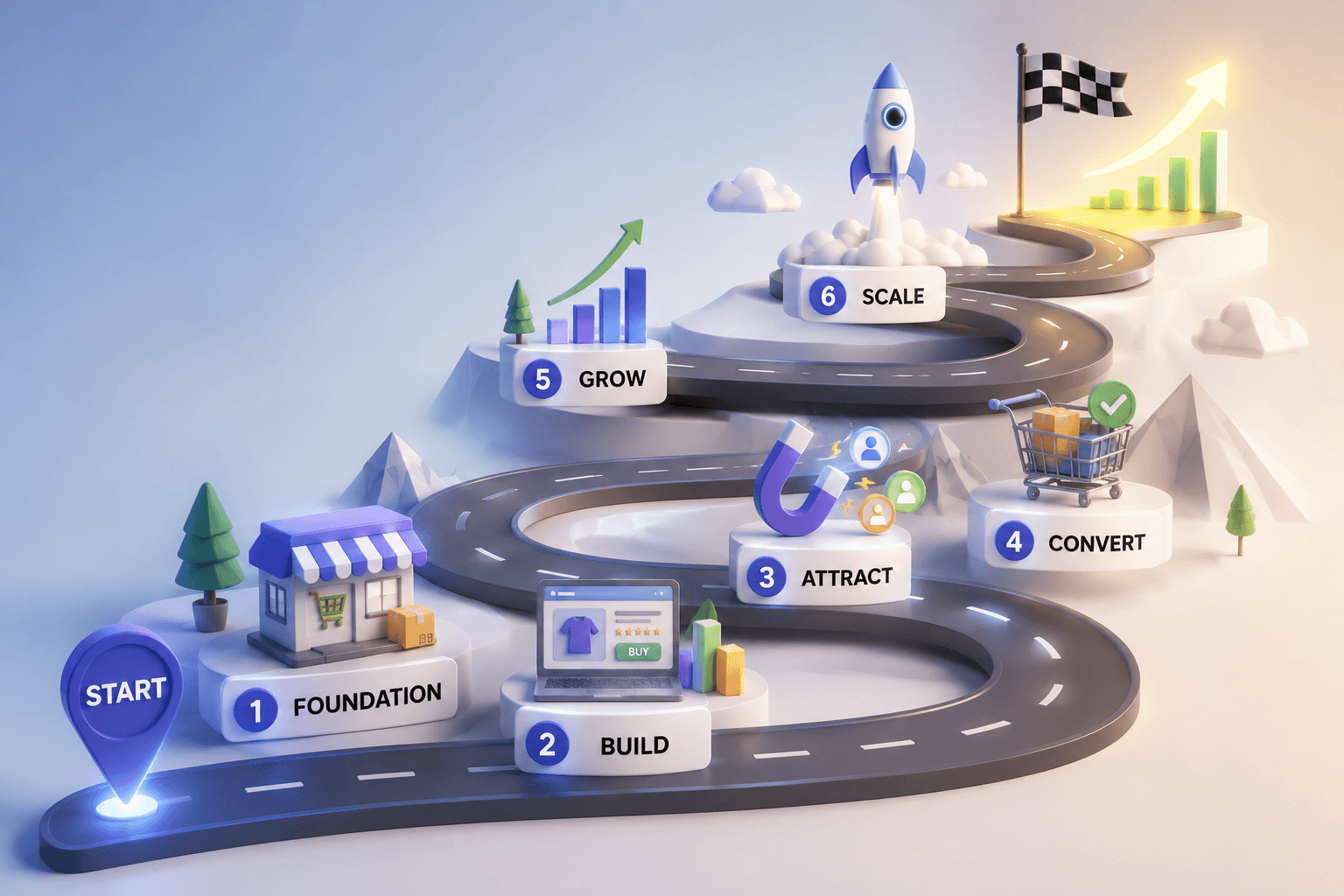
It started small. Maybe it was a batch of handmade candles you listed on Instagram on a whim. Maybe it was a saree collection you were reselling from your living room. Maybe it was jewellery you were crafting on weekends and selling through WhatsApp to people in your contact list.
You weren't thinking about building a company. You were just trying something.
Then something unexpected happened, people actually bought. Then they came back. Then they told their friends. And one day you looked at your phone and realised you had more orders than you had hours in the day and what started as a side hustle had quietly become something that looked a lot like a real business.
This is the moment that defines everything. Not the first sale. Not going viral. This moment right here where you have to decide whether you're going to treat it like the business it's becoming, or keep running it like the hobby it used to be.
Most sellers at this crossroads make the same mistake. They try to scale their effort instead of their systems. They work harder, stay up later, manage more chaos manually and eventually hit a wall. The smarter path is completely different, and that's exactly what this guide is about.
The Side Hustle Trap Nobody Warns You About
There's a particular kind of exhaustion that hits when your side hustle starts growing. It's not the good tired of building something, it's the bad tired of not being able to keep up.
You're handling every order yourself. Your inventory is somewhere between your head and a notes app. Customer messages are coming in across Instagram DMs, WhatsApp, and email simultaneously. You're packaging orders at midnight, updating product photos on Sunday afternoons, and constantly feeling like you're one busy week away from dropping something important.
This is the side hustle trap: the business is growing, but the infrastructure hasn't grown with it. And the longer you stay in this mode, the harder it gets to get out.
Scaling your online business isn't about working more. It's about building something that can run without every single piece of it depending on you personally.
Step One: Acknowledge That This Is a Real Business Now
This sounds obvious, but it's genuinely the hardest part for most sellers. When you started, there were no expectations. Now there are. Customers are counting on you. Orders need to be fulfilled on time. Your reputation is being built with every interaction.
That shift requires a mindset change before it requires any tactical change. You are no longer just a person who sells things on Instagram. You are a business owner. And business owners build systems, not just products.
For a lot of Indian sellers, especially those running a home business, a fashion boutique, a saree brand, or a handmade product line, this realisation often comes with a second one: the way you've been selling can't carry you where you want to go. Selling only on Instagram, managing orders over WhatsApp, keeping inventory in your head these aren't strategies. They're survival mechanisms from the early days.
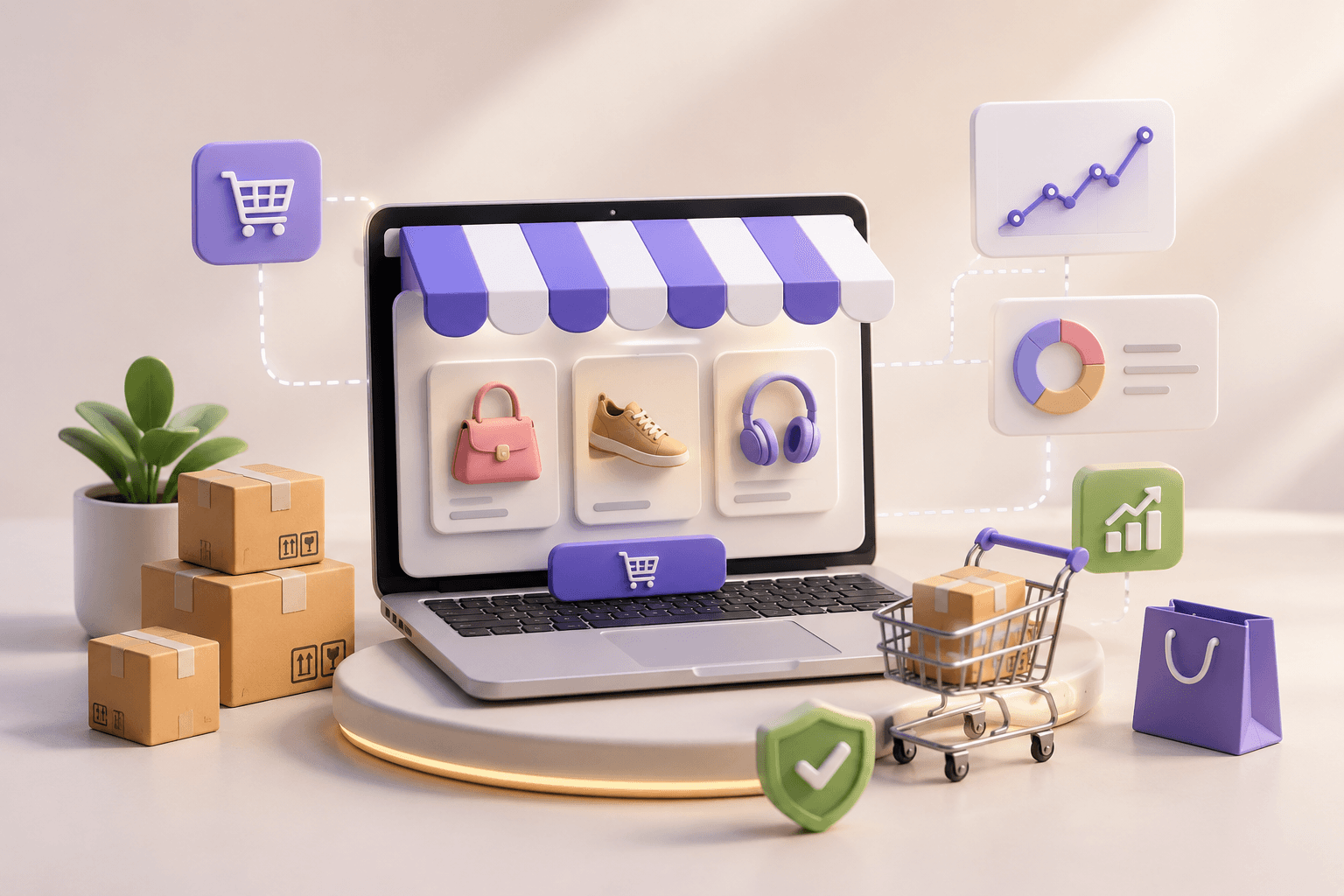
The first practical step is owning your own storefront. A proper online store, not just a link in bio, not just a marketplace listing gives your business a home. It's the difference between a street vendor and a shop. Both can sell great products. Only one of them is building something.
Step Two: Build Systems Before You Need Them
The biggest operational mistake growing sellers make is waiting until things break before fixing them. By then, you're fixing problems under pressure, and the cost in time, in customer trust, in your own sanity is always higher.
Start with your product catalogue. Clean, organised, and complete. Every item should have accurate descriptions, real photos, correct variants, and up-to-date pricing. Product catalogue management for Indian sellers often gets treated as a one-time task, but it's actually a living system. As you add products, run sales, or change prices, your catalogue needs to reflect that everywhere, not just on one platform.
When your catalogue is the single source of truth for your business, everything else gets easier. Your customers find what they're looking for. Your orders come in with accurate information. Your team (if and when you have one) doesn't have to ask you what a product costs.
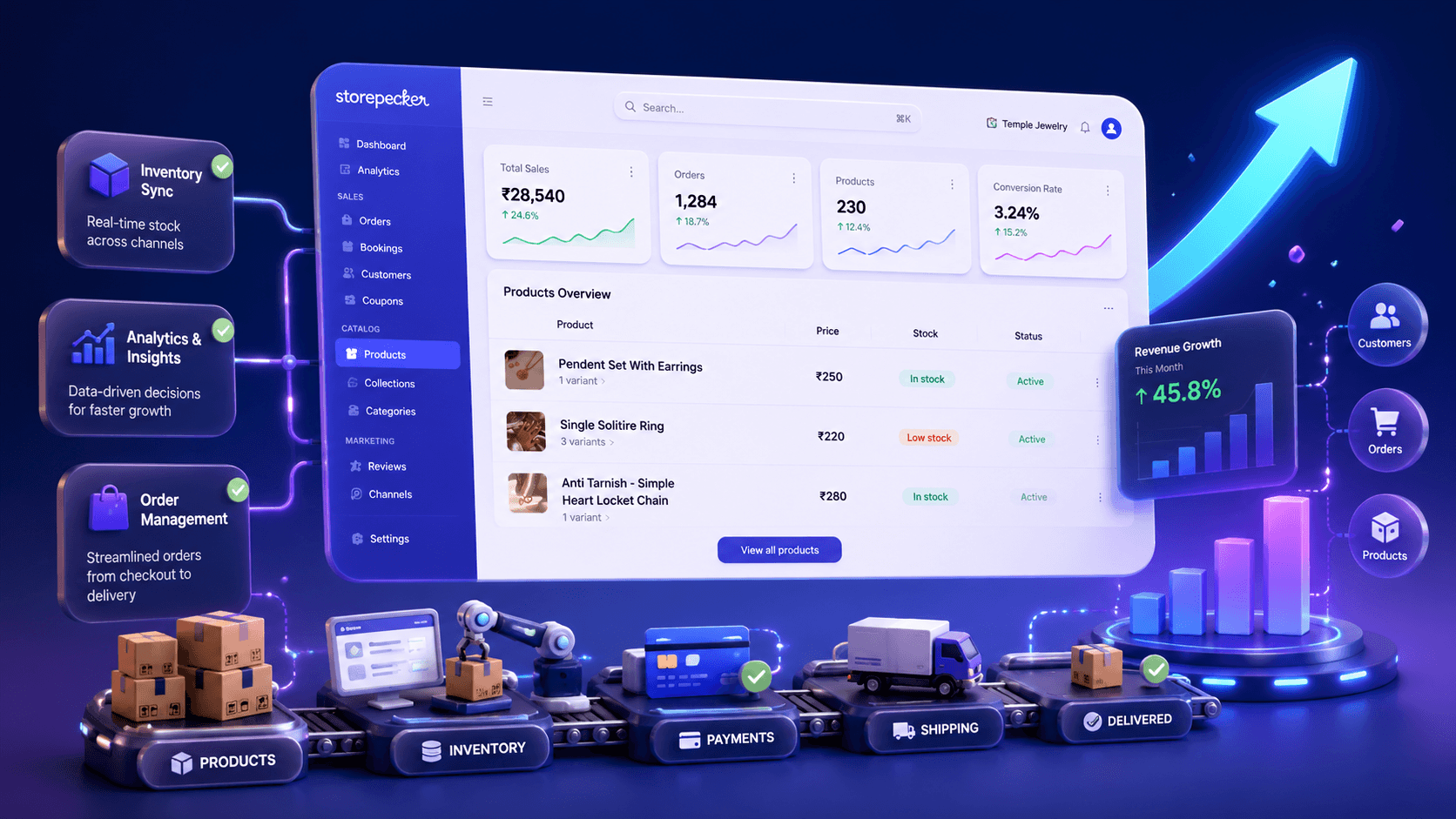
Next, get your inventory off of mental storage. Inventory management for online stores isn't a large-business luxury. It's a basic requirement the moment you have more products than you can hold in your head. Real-time stock tracking means you stop overselling. Low-stock alerts mean you reorder before you run out. And if you're selling across your website and social channels simultaneously, your inventory needs to be consistent across all of them.
For sellers with variants sizes, colours, materials, finishes this is especially critical. The saree seller who can't tell a customer whether a specific colour is in stock, the jewellery brand that accidentally sells the last piece of a limited edition to two people at once these are the kinds of mistakes that inventory management prevents.
Then build an order management system that handles the volume. When you have five orders a day, you can manage them manually. When you are fifty, you can't. An order management system for your Indian online store gives you a centralised view of everything pending, packed, dispatched, delivered without you having to piece it together from three different apps.
This becomes even more important when you're doing WhatsApp selling alongside your website. The best platforms for Indian sellers bring these channels together rather than treating them separately. Your WhatsApp orders shouldn't live in a different world from your website orders.
Step Three: Move Your Customers to a Platform You Own
Here's a story that plays out for growing Indian sellers more often than it should. A seller builds a genuine following on Instagram 50,000, sometimes 100,000 followers. Real customers who love their products. Then the algorithm changes, reach drops, and suddenly the business they built is significantly less visible overnight.
This is the risk of building on rented land. Instagram is a brilliant discovery tool. It's not a reliable business infrastructure.
The smartest thing any growing seller can do, especially those running an Instagram boutique, a fashion label, or a D2C brand is to move customers from their social channels to a platform they actually own. A real website, with a real checkout, where you capture customer data, control the experience, and aren't at the mercy of someone else's algorithm.
Converting Instagram followers to customers on your own website changes the economics of your business completely. You stop paying to reach people who already follow you. You start building a customer list you own. You can run email campaigns, WhatsApp follow-ups, and loyalty programmes none of which are possible when Instagram owns the relationship.
This is also where the own brand store vs marketplace debate resolves itself for most sellers. Marketplaces give you volume early on, but they take a cut of every sale, own the customer relationship, and make it nearly impossible to build a brand that customers remember. Your own store does the opposite. Lower margins on day one, but compounding brand value over time.
The sellers who are scaling their D2C business successfully in India are overwhelmingly the ones who moved off dependency on marketplaces and built their own channels.
Step Four: Let Data Drive Your Decisions
One of the most significant upgrades in going from side hustle mode to serious business mode is the shift from gut decisions to data decisions. In the early days, you followed your instincts and that was fine. As the business grows, instinct needs to be informed by numbers.
An eCommerce analytics dashboard gives you visibility into things that matter for growth: your best-selling products, your average order value, your conversion rate, where your traffic is coming from, and how often customers return. These aren't vanity metrics. They're the signals that tell you where to invest and where to pull back.
Without this data, you end up promoting products that don't sell well and understocking the ones that do. You spend money on marketing channels that aren't converting. You make expansion decisions based on what feels right rather than what the numbers support.
For small businesses in India trying to grow online, access to eCommerce growth tools that surface this data without requiring a data analyst is genuinely a competitive advantage. The sellers using smart analytics are making better decisions faster than those who aren't.
Step Five: Use AI to Do More Without Hiring More
There's a real tension in scaling a small business: you need to do more, but you're not ready to hire a team. AI-powered online store management is increasingly the answer to this tension for Indian sellers.
AI tools in eCommerce aren't abstract or futuristic anymore. They're doing practical things right now: writing product descriptions, predicting which inventory needs to be restocked, flagging orders that look unusual, personalising the shopping experience for return customers, and automating the operational communications that used to take hours every week.
For D2C brands in India specifically, AI eCommerce tools are starting to separate the sellers who can scale efficiently from those who can't. The same person who used to manage 20 orders a day can now with the right smart eCommerce platform manage 200, because the repetitive operational work is handled automatically.
This is the compounding advantage of building on the right infrastructure early. Every tool you put in place reduces the time cost of each new order. As volume grows, you get more leverage from the same effort.
The Moment Everything Changes
There's a version of your business a year from now that looks genuinely different from where you are today. Orders flowing in from your own website. Inventory updating automatically. Analytics showing you exactly which products to push and which to rethink. Customers returned because you stayed in touch and gave them a reason to. A brand people remember rather than just a seller they found once.
That version doesn't happen by accident, and it doesn't happen by working harder. It happens when you stop running a side hustle and start running a business with the systems, the data, and the platform to back it up.
Every serious business needs serious infrastructure underneath it. For Indian sellers in 2026, that means owning your own storefront, managing operations with real tools, using data to make decisions, and building on a platform that was actually designed for the way selling works in India UPI, COD, GST billing, WhatsApp integration, and all.
The side hustle phase served its purpose. It got you here. But where you're going next requires something more.
Take your store to the next level with Storepecker - the smart eCommerce platform built for growing Indian sellers. Whether you're moving from Instagram to your own website, building out your D2C brand, or just trying to stop managing everything manually, Storepecker gives you the tools to scale the right way.
Your business outgrew the side hustle. It's time your platform did too.